
Women
As an organization, the Windsor Symphony Orchestra has not only welcomed women to its corps of musicians, administration and management but without the leadership of women volunteers, the WSO would not have existed. The Art Gallery of Windsor and the Windsor Public Library have similarly benefitted from the work of women. When many other businesses did not hire women as a matter of course, these organizations provided opportunities for women to showcase their talents.
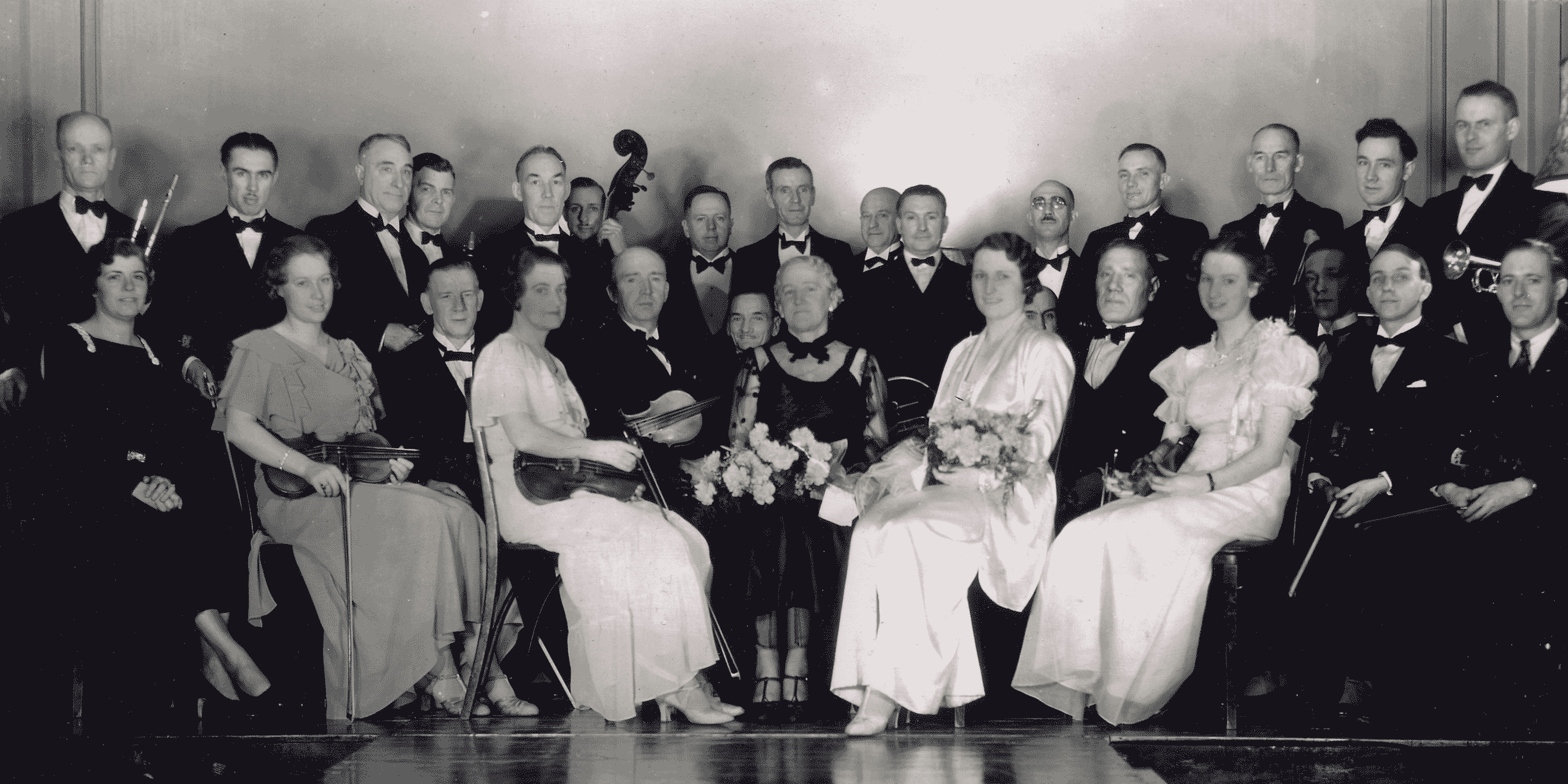 The WSO as we know it was founded in the Fall of 1937 at the home of Mrs. W.T. Balman in Windsor. Details are unclear, but a Mrs. Claire Balman is listed as an early musician with the WSO, and this meeting may have been the nucleus of a local women’s social group known as the Senior Mary Grant Society, lead by Mrs. Graham J. Lacker. This group sponsored the fifty musicians who played the first concert in April, 1938 and sponsored more after that.
The WSO Women’s Association was formed in 1956 and continued to sponsor the orchestra by helping to fund young people’s concerts, buying tickets for children who would not be able to afford to attend concerts, buying and repairing instruments and assisting the orchestra with general expenses, education and scholarships. They also instituted post-concert receptions so that WSO supporters and musicians could mingle after concerts. (See also Volunteers.)
In April 1972, the Women’s Association comprised of 64 members who were thanked from the stage by Matti Holli for purchasing a celesta, a xylophone-type instrument, and had donated $2,500 from their fundraising efforts to the WSO. A conductor’s salary at the time was $7,000, so the contribution was significant. As well as fundraising, the Women’s Association was effectively the WSO’s volunteer sales force. They sold tickets, subscriptions and canvassed for corporate sponsorship. They also took an active role on the Windsor Symphony Society Board, giving and gaining valuable executive experience.
The Women’s Association executive were event planning experts, planning and holding teas, antique sales, and even fundraising literary events with the University of Windsor’s writer-in-residence at the time, W.O. Mitchell.
In 1979, another affiliate women’s group was formed. The Junior Women’s Association changed its name to the “Windsor Symphony League” in 1986. They worked at countless charity bingos in order to raise money for the WSO.
The professional and artistic role of women in the WSO was highlighted in an article in the Windsor Daily Star by Mary Botosan (October 22, 1965). Among 65 musicians in the WSO, 16 were women. Three female musicians at the time were in their teens, and so benefitted from the educational opportunities of belonging to an orchestra. “Housewife” was a common term in those days, and a few musicians called themselves that, although their music skills were at professional levels. One musician was studying dentistry and found that playing in the orchestra allowed her to relax. There were several women music teachers, including Anna Grayson, and Violet Webb Leach, who improved their own skills by playing with the WSO.
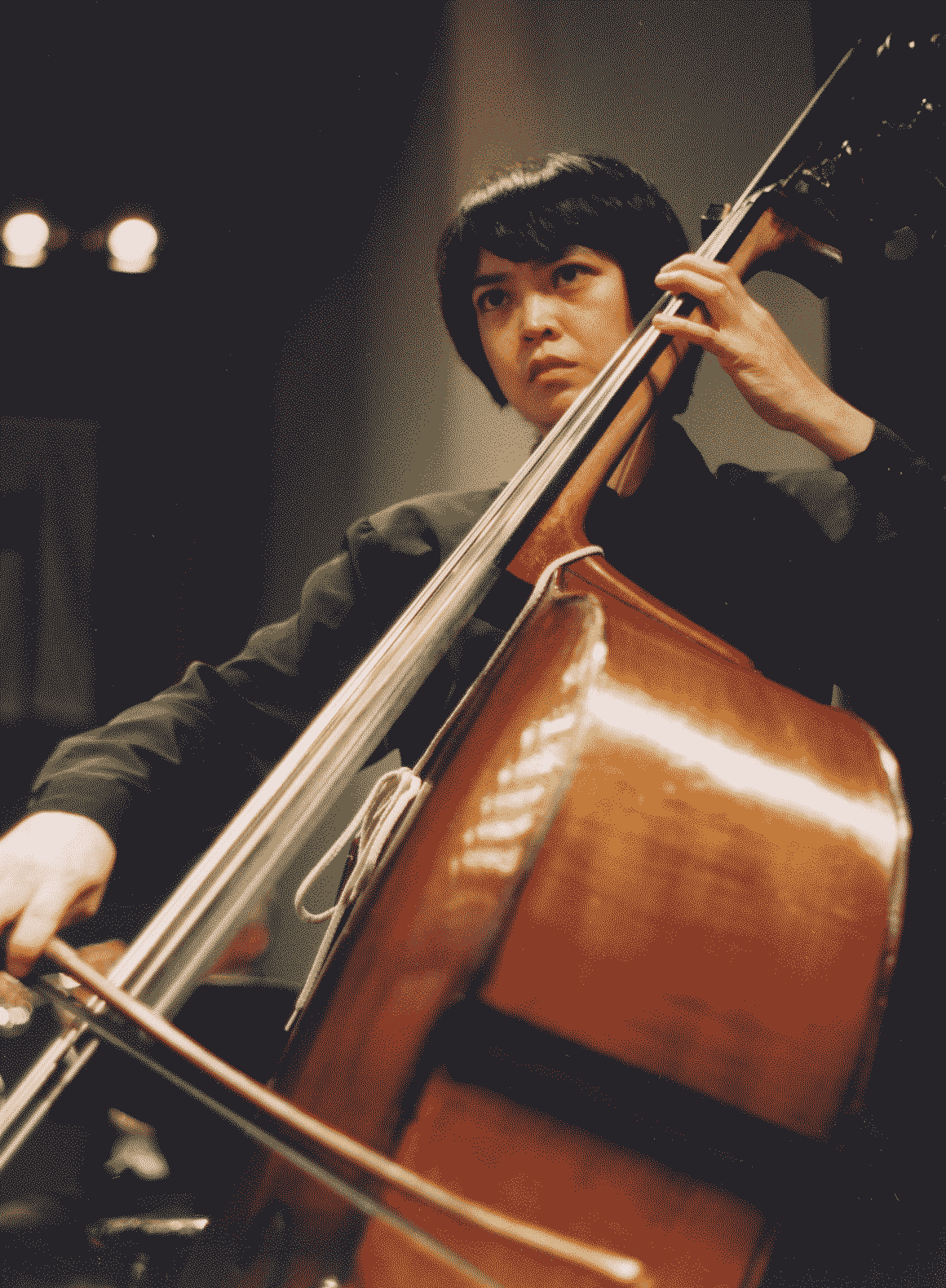
Margaret Krause, a popular local music teacher who had studied at the Royal Academy of Music in London, played the cello for the orchestra and in the 1980s also took on an administrative role as manager under Laszlo Gati.
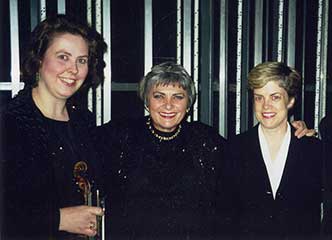 Mina Grossman-Ianni was a board member and later general manager of the WSO from 1998 to 2006. She was the recipient of the Windsor Woman of the Year award and Orchestra Canada’s prestigious Betty Webster award for her work with CBC French radio and her work for the WSO. As manager, she upgraded the WSO office and management systems and restored financial stability.
The Roman Catholic religious order of the Ursuline Sisters played a crucial role in the development of music in the city of Windsor. They are an order dedicated to teaching, and ran a music school from a former mansion on Ouellette Avenue (now the location of the Central Branch of the Windsor Public Library). Many orchestra members studied with the Ursuline nuns, including conductor Matti Holli. In 1966, Vatican II changed the rules of the Ursuline Order and allowed the sisters to take a more visible role in the community. Music teacher Mother Mary Isaac from the Windsor school made her orchestra debut in the cello section of the WSO in November, 1966.
Female musicians still had challenges even in the music profession. Local musician Celia Hardcastle, who had studied music theory and cello from a very young age was obliged to request special permission to join the local musician’s union – not because she was underage, starting her first professional work in her teens – but because she was a woman.
The Windsor Symphony Orchestra broke new ground for professional female musicians in Canada by hiring Susan Haig, the first woman conductor to take charge of the ensemble in 1991. Before that, she was also the first female guest conductor to play with the WSO in 1990. At that time, Haig acknowledged that progress was slow for women in Canadian orchestras, but she had not found that it hampered her career (Gervais, October 26, 1990). Prior to joining the WSO, Haig was the Associate Conductor of the Calgary Philharmonic Orchestra.
Haig founded the annual Canadian Music Festival (now known as the Windsor Canadian Music Festival), a partnership with the WSO and the University of Windsor to showcase Canadian composers. Themes for Windsor Canadian Music Festival of 2000 have included women composers: Alexina Louie, Svetlana Maksimovic, Anita Sleeman, Heather Schmidt and Alice Ho. These composers worked in collaboration with Canadian poets, Di Brandt, Margaret Christakos, and Penn Kemp.
 Also ground-breaking for the WSO was a time that the group had not one, but two women as conductors. Sarah John was an Apprentice Conductor for Susan Haig, then Assistant Conductor and “Conductor-in-the-Community” thanks to an arts grant. She conducted several concerts of the WSO, including a celebration of the 1996 Olympics featuring local Olympic athletes at the show. John continues her conducting career with the Greater Toronto Philharmonic Orchestra and Vespera, a women’s contemporary choral group.